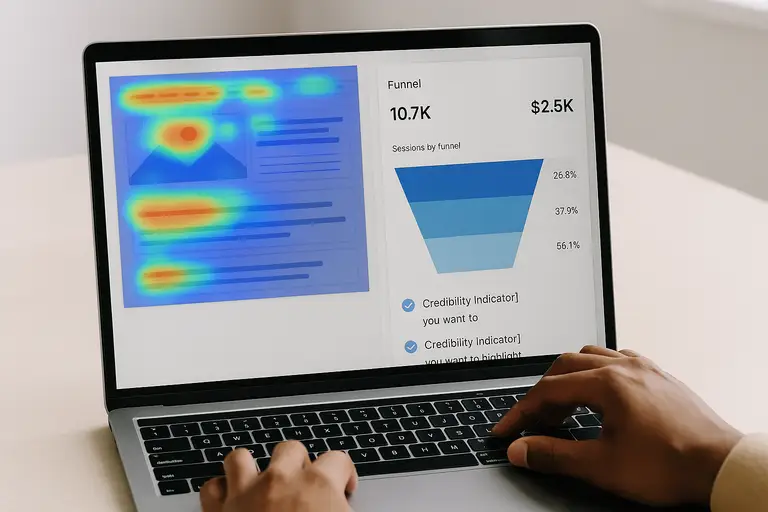
The Power of Pre-Landing Pages: How to Boost Campaign Performance Before the Click
Digital campaigns are often judged by what happens after a user clicks an ad—but what if we told you that the real magic begins before the click?
Pre-landing pages—also called “bridge pages” or “interstitial pages”—are an underrated tool that smart advertisers use to warm up audiences, improve relevance, and drive higher conversions. They act as a crucial middle step between the ad and the main offer.
In this post, we’ll explore what pre-landers are, why they work, and how you can build ones that supercharge your campaign performance.
What is a Pre-Landing Page?
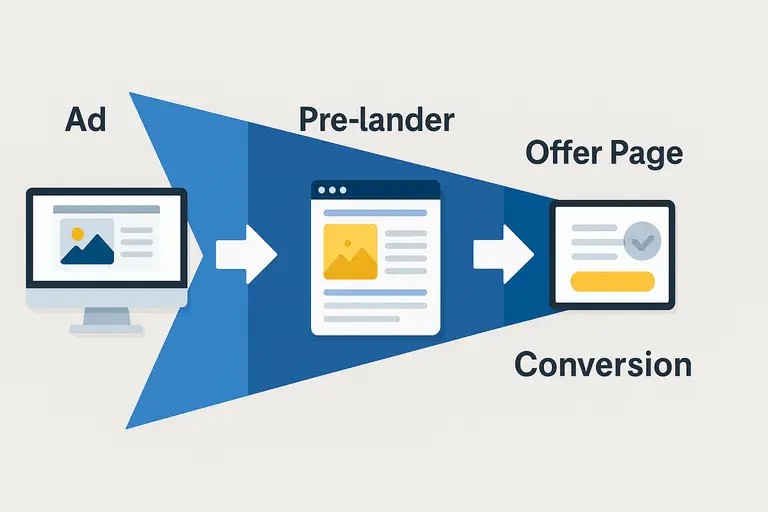
A pre-landing page is a page that users see immediately after clicking an ad but before they reach the final landing page or offer. Think of it as the warm-up act that prepares them for the pitch.
Rather than sending cold traffic directly to a sales or signup page, pre-landers:
- Introduce context
- Build curiosity or credibility
- Segment users
- Increase engagement quality
Why Pre-Landing Pages Work
Modern users are skeptical. They don’t want to be sold immediately—they want to be understood.
Here’s why pre-landers perform:
- Reduces Bounce Rate – Visitors are more likely to stay when they feel guided
- Warms Up Traffic – Builds intent and emotional connection
- Improves Relevance Score (on ad platforms) – Higher engagement signals lead to better CPM
- Filters Unqualified Traffic – Only genuinely interested users continue
- Boosts Conversion Rates – Pre-framing increases likelihood of action
Types of Pre-Landing Pages
Not all pre-landers are created equal. The type you use depends on your product, audience, and campaign goals.
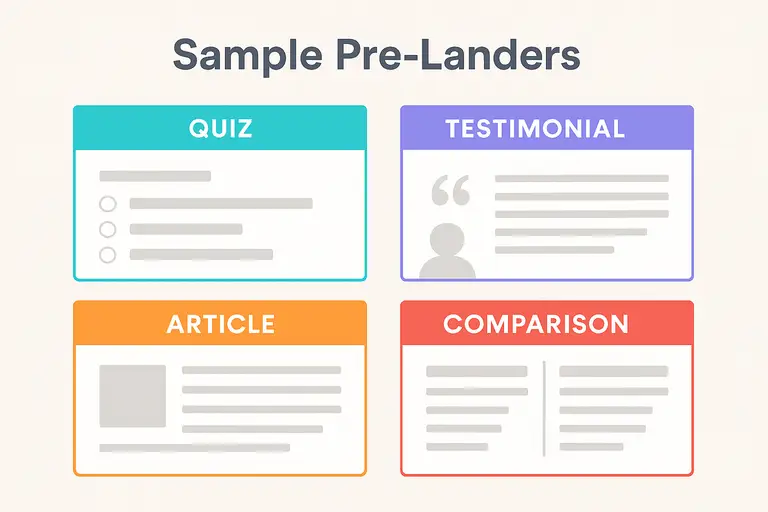
1. Quiz or Survey Page
Interactive and high-converting. Great for e-commerce, apps, or lead gen.
Example: “Which skincare routine is right for you?” → personalized product results.
2. Educational Article
Story-style explanation or mini blog to create problem-awareness before the solution.
Example: “Why 80% of office workers suffer from back pain—and what you can do about it.”
3. Testimonial Page
Shows real user experiences, video reviews, or before-after stories.
Example: “How Sarah lost 12 lbs in 60 days using this daily ritual.”
4. Comparison Chart
Ideal for competitive markets. Positions your offer as the smarter choice.
Example: “[Product A] vs. [Product B]—Which is the better value in 2024?”
The Psychology Behind It
Pre-landers leverage psychology to guide user behavior. Here’s how:
- Commitment Bias: If a user starts a quiz, they’re more likely to finish the flow
- Curiosity Gap: Headlines and structured content create a need to know what’s next
- Trust Signals: Testimonials and authority cues lower resistance
- Social Proof: Real stories validate the offer indirectly
By the time users reach your actual offer page, they’re not strangers—they’re pre-sold.
How to Build a High-Converting Pre-Lander
Headline = Problem + Tease
Grab attention by highlighting the pain point and hinting at the solution.
Example: “Tired of late deliveries? Discover how this simple tool cuts shipping time in half.”
Subheadline = Relevance
Make the user feel like the page is meant just for them.
Example: “Trusted by 10,000+ eCommerce sellers who need results fast.”
Body = Narrative or Interactive Flow
Either tell a story or ask questions that subtly lead toward your solution.
Bonus: Use emojis, bullets, and images to make scanning easy.
Call to Action = Action + Outcome
Don’t just say “Click here.” Say:
“Find My Match”
“Unlock My Plan”
“Get Instant Access”

Tools You Can Use to Build Them
- Unbounce – Drag & drop pre-lander builder with A/B testing
- Carrd – Super-lightweight and fast for single-page pre-landers
- Swipe Pages – Mobile-first page builder with interactive elements
- Webflow – Full control for custom experiences
- WordPress + Elementor – Flexible if you want deeper integrations
Pre-Lander Performance Metrics to Track
Once your pre-lander is live, don’t forget to measure:
- Time on Page: Are users reading?
- Click-Through Rate (CTR): Are they continuing to the main offer?
- Scroll Depth: Where are they dropping off?
- Form Completion Rate: If interactive
- Split Test Results: Which version performs best?
Bonus Use Case: Pre-Landers for Mobile Campaigns
On mobile, attention spans are even shorter. Pre-landers here should be:
- Vertical scroll-optimized
- Fast-loading (under 2 seconds)
- Touch-friendly with large CTAs
- Minimal copy, max impact
Small tweaks in copy or image placement can significantly improve ROI.
Final Thoughts
Pre-landing pages aren’t just a “nice to have”—they’re a campaign performance booster that separates good advertising from great results.
They give your campaigns:
- More context
- Better conversion rates
- Lower cost per action
- Deeper insight into user behavior
If you're looking to build campaigns that don’t just run—but convert—start using pre-landers today.